We could not be more excited to officially be settled in to our new home at Five Element Farm. Every box is unpacked, every corner is organized, and all of our animals but Sera are at home on the property. We knew when we bought our new home that we’d be enjoying much more green and faaaaaar more water than we did in Santa Fe, but nothing prepared us for the delights that have continued to unfold as Spring and early Summer emerged in the Idaho Panhandle. For those of you not able to visit, here are a few of the joys of Five Element Farm.
When we first arrived, Spring was just beginning to cast her green cloak over our new landscape. The alders were just beginning to leaf out…

The entrance to our driveway quickly went from a brown tangle of dried grasses to a colorful display of shrubs and volunteers…

The property is dotted with TONS of perennial flowers and beneficial herbs, many of which are volunteers, some of which others would consider weeds. We’re delighted to have all of them as many are beneficial to health and balance…
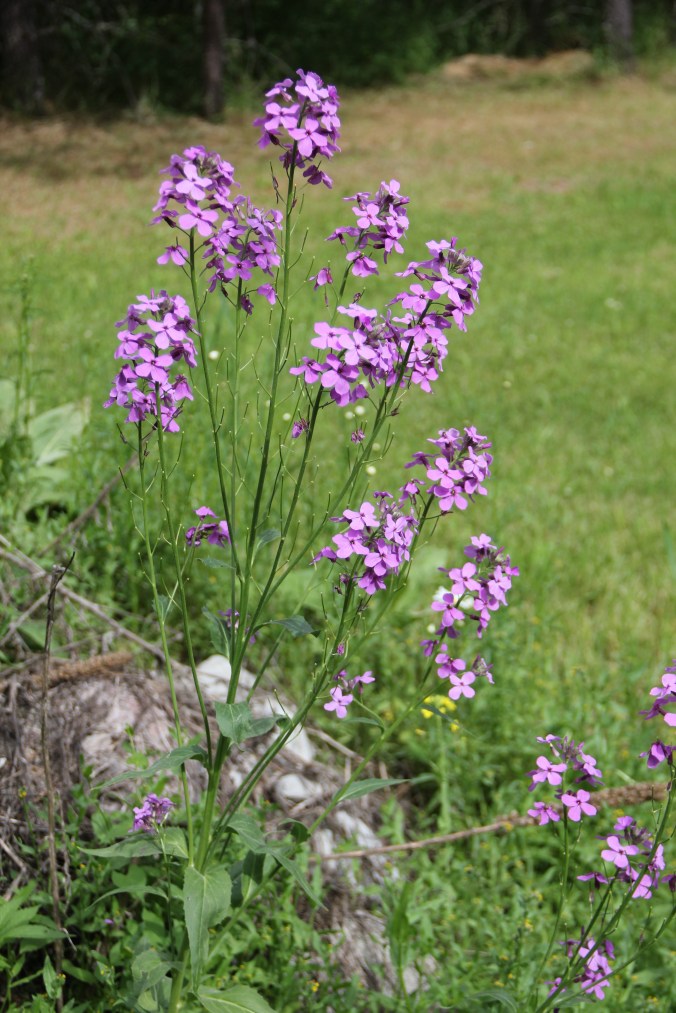
In among the plantings the previous owners made, there are wildflowers galore like this dainty and richly colored wild iris.

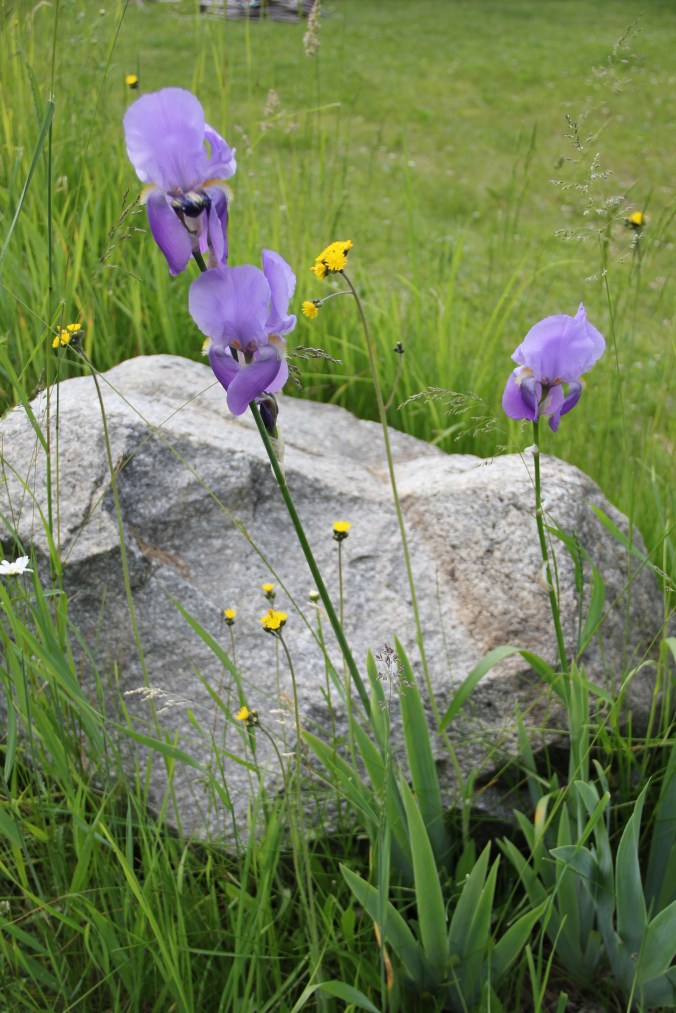
We have been enjoying a thick display of the taller, paler irises as well.
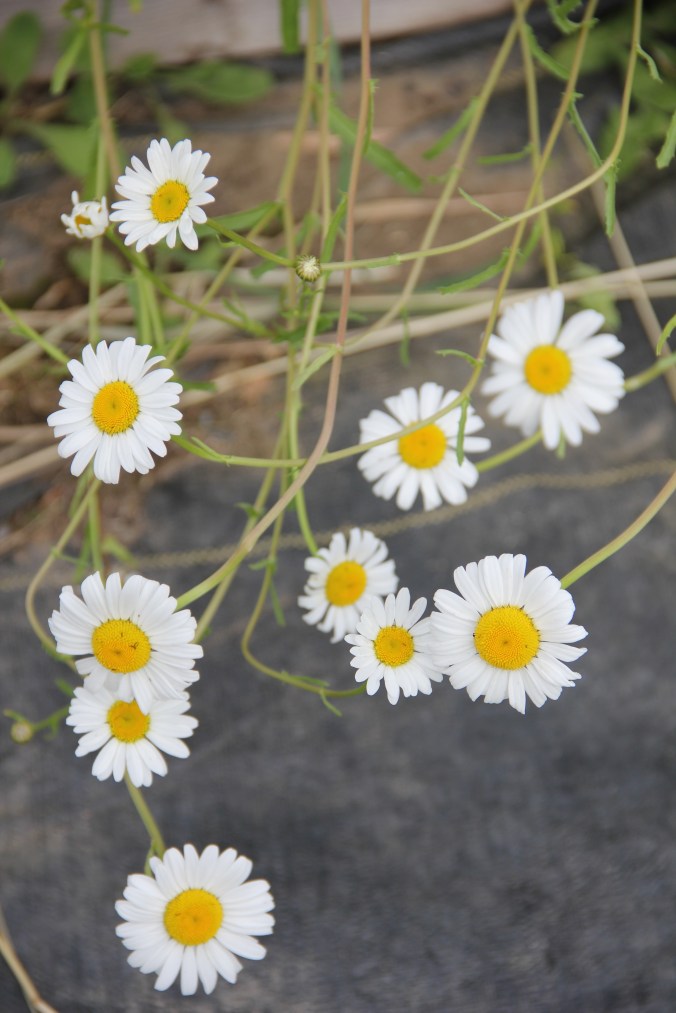
While they weren’t intentionally planted, we delight in the little Shasta daisies that have popped up all over the property…
Creeping thyme helps choke out weeds in the front garden and is an early-blooming treat for honeybees.

The landscape is favored with every color in the rainbow.
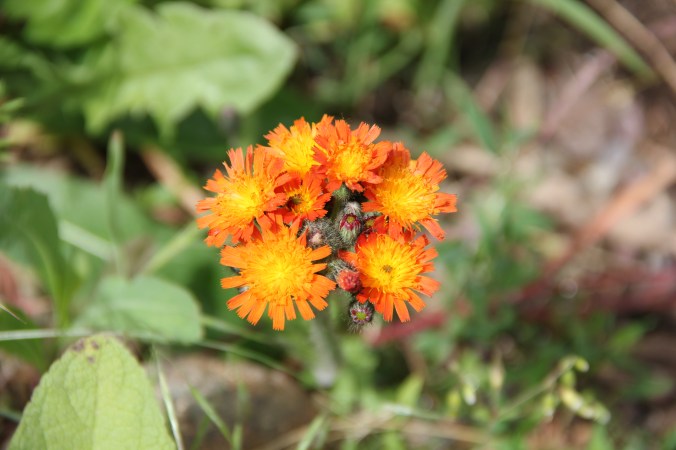
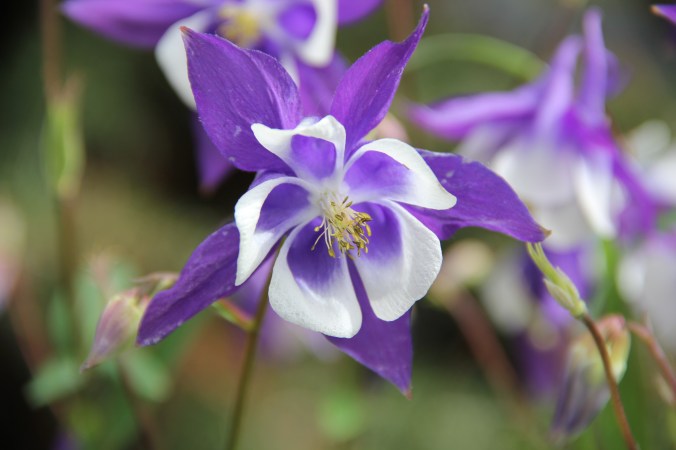
We’ve never seen such enormous columbines–we have four varieties gracing the garden…
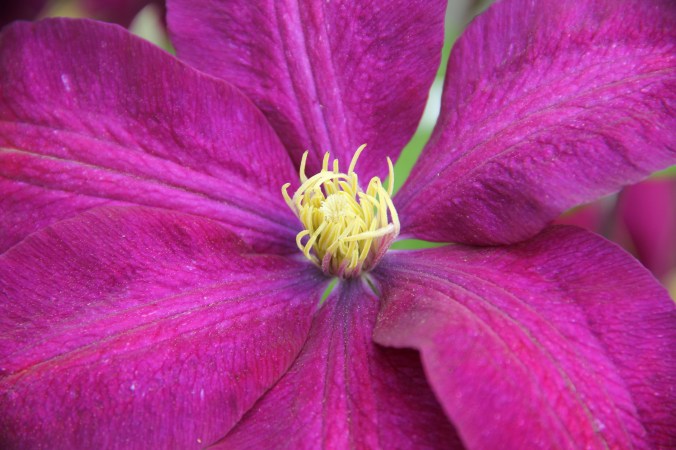
Clematis emerged last week as big as my open hand…
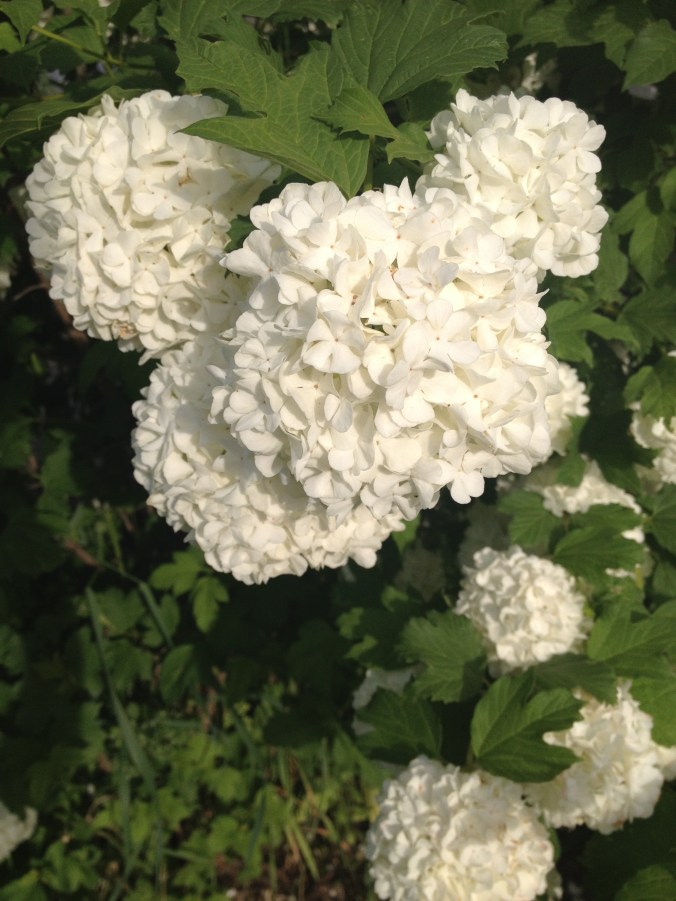
These fluffy white blossoms are a delight outside our mudroom…
The pond at the front entrance to the house makes for a peaceful and refreshing meditation space…

Even though we’ve only been here for a few weeks, we’ve beaten the weeds back enough to get the garden started–carrots, beets, radishes, pole beans, butternut squash, cucumbers, acorn squash, snap peas, snow peas, herbs, and much more are already underway…

We had our first radishes–spicy and juicy!–within weeks of our first planting…

Wee fish have already been added to the pond for still more color and life…

Evergreens provide shade, nesting for birds, and rich contrast at the border of the yard and our pasture…

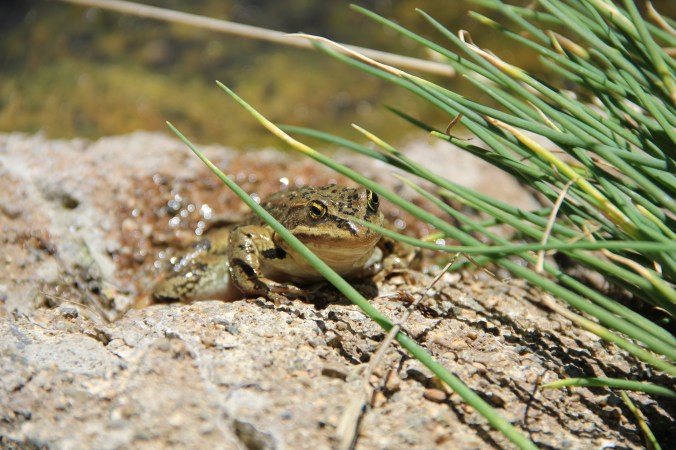
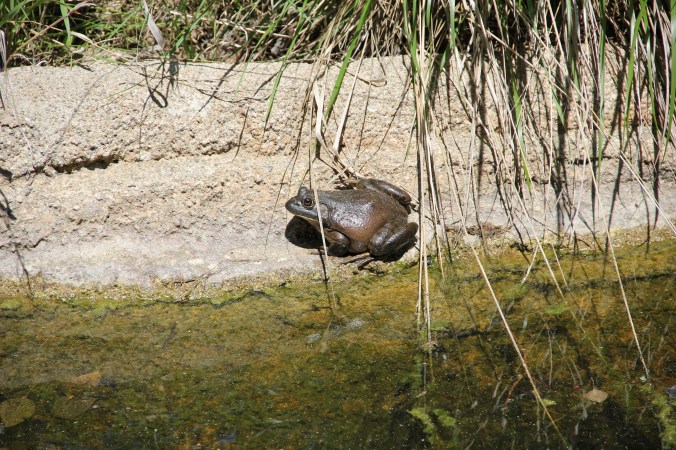
We’ve had some volunteer fauna, too–here a tiny pond frog soaking up the sun…
His MUCH larger buddy the bullfrog has also enjoyed the pond for sunning and swimming–this guy is as big as my two fists put together….
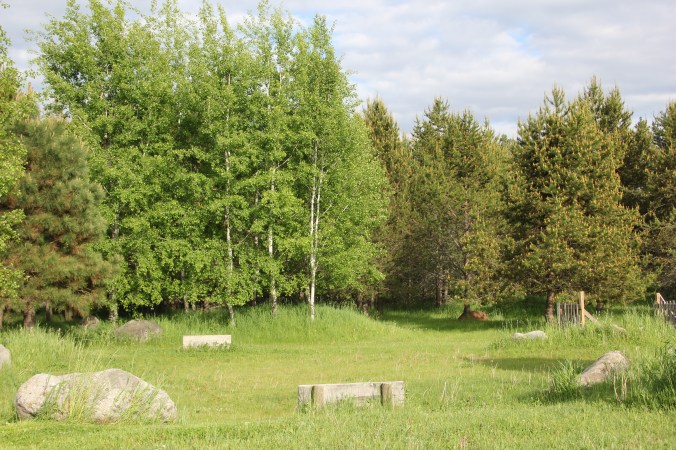
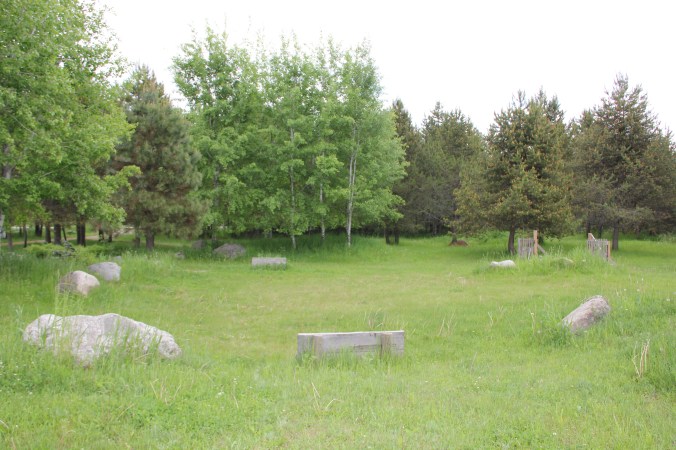
Now, those tall and meek alders are fully leafed out in grand display around the front entry…
The perennials that remain from the previous owners continue to dazzle us, like these azaleas…

Things just get greener, thicker, and taller–it’s wonderful to behold…
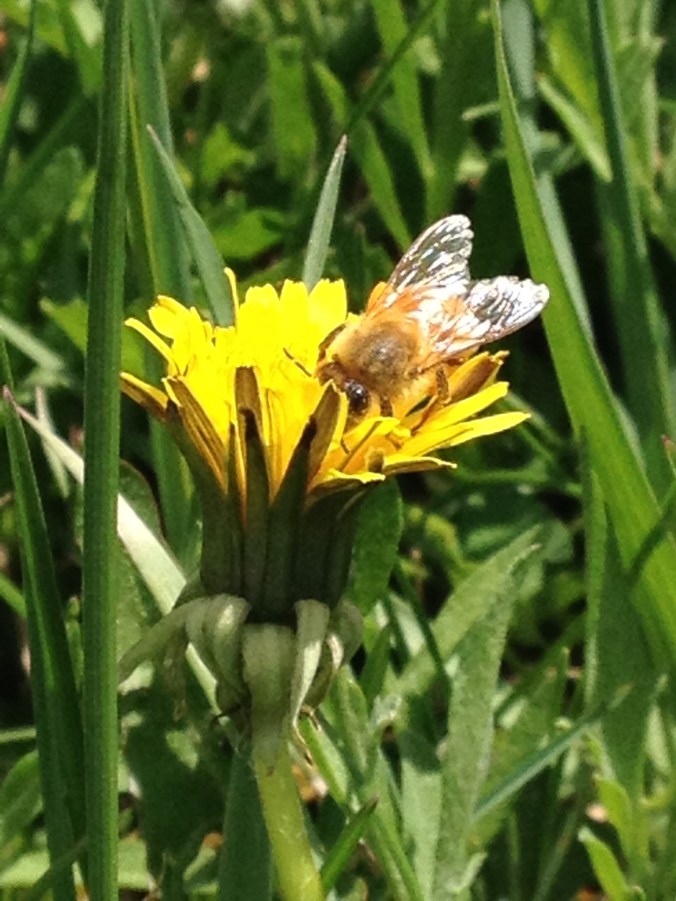
While we eventually hope to get a nuc for our own hive, we aren’t without abundant honeybees in our yard and gardens…
Speaking of nuts, this is a nuksuk, said to confuse polar bears into thinking a person is there–they are useful when one wants to confuse the bear into thinking one is not alone and therefore not easy prey. We have learned they also work on poodles: Muppet is veritably terrified of them…

There will be much more to share soon as we get still more settled in–just wanted you all to get a small sense of our little Heaven on Earth.
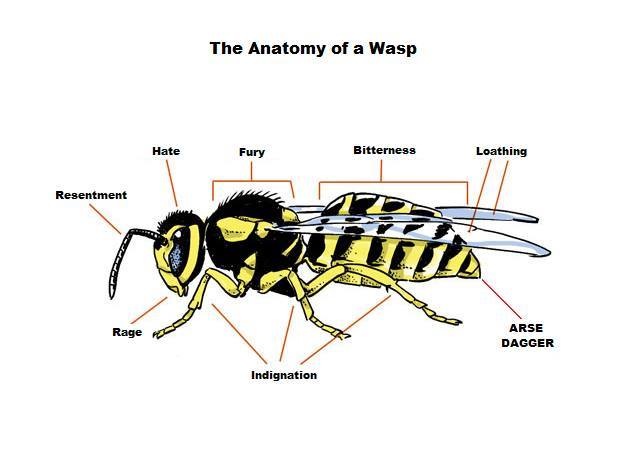 While you aren’t likely to be truly bugged by stinging insects until the pinnacle of summer, NOW is the time to get a head start on keeping their summer populations down. Why?
 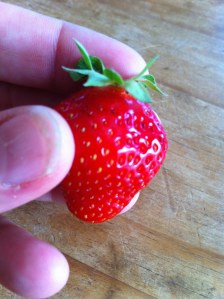 My heart always delights in seeing nature come back to life, but the joy in seeing life rekindled, especially in kitchen perennials, is especially profound this year. At the point that some of the established fruits and greens were waving at me last year on the farm, I was buried in boxes, furniture, pictures, and STUFF to unpack, organize, and put in place. This year, the emerging flowers, fruits, greens, and bushes have my undivided attention. Inevitably, I am already plotting how to best use them in my now well-established kitchen/pantry–and looking for ways to honor and celebrate my roots in utilizing our farm’s bounty.
 So, if you want to attract more bees to your garden, plant an abundance of yellow- and blue-hued flowers.
 Dry Ingredients:
 Spread in a thin layer on multiple shallow baking sheets. (I use four cookie sheets to make this recipe with two in the oven at one time.)
 Enjoy your Rise & Shine granola with yogurt or kefir, sliced fruit, and a drizzle of honey for breakfast, mix with carob, peanuts, and extra raisins as a trail mix blend, sprinkle as a crumble on top of fresh fruit salads or ice cream for dessert, or just enjoy with milk anytime…
 five element farm